Altering Tradition in an Artificial Landscape
A visual study and documentation of the changing tradition of the migrant miners in Dahibari coal mine(2021-2025)


As an art practitioner, the primary intention of my research is to understand the unique physiography of the Dahibari coal mine (Jharkhand) and develop a visual language that translates the landscape in my art practice. I discuss how the cultural identity of local residents remains related to their lands and how migration and landscape transformations can gradually morph these practices.
A brief case study of Sohrai- a folk painting tradition that is practiced majorly by the people living around coal mine belts. Through the transitions of Sohrai in recent times, I have tried to inspect the land-human-culture relation in context with my observations, using visual tools collected directly from the landscape. The analysis concludes that in a changing landscape inhabited by migrant people, transition of traditions is unavoidable and it would need extensive research and funding from scholars and administrations to preserve such age-old traditions.
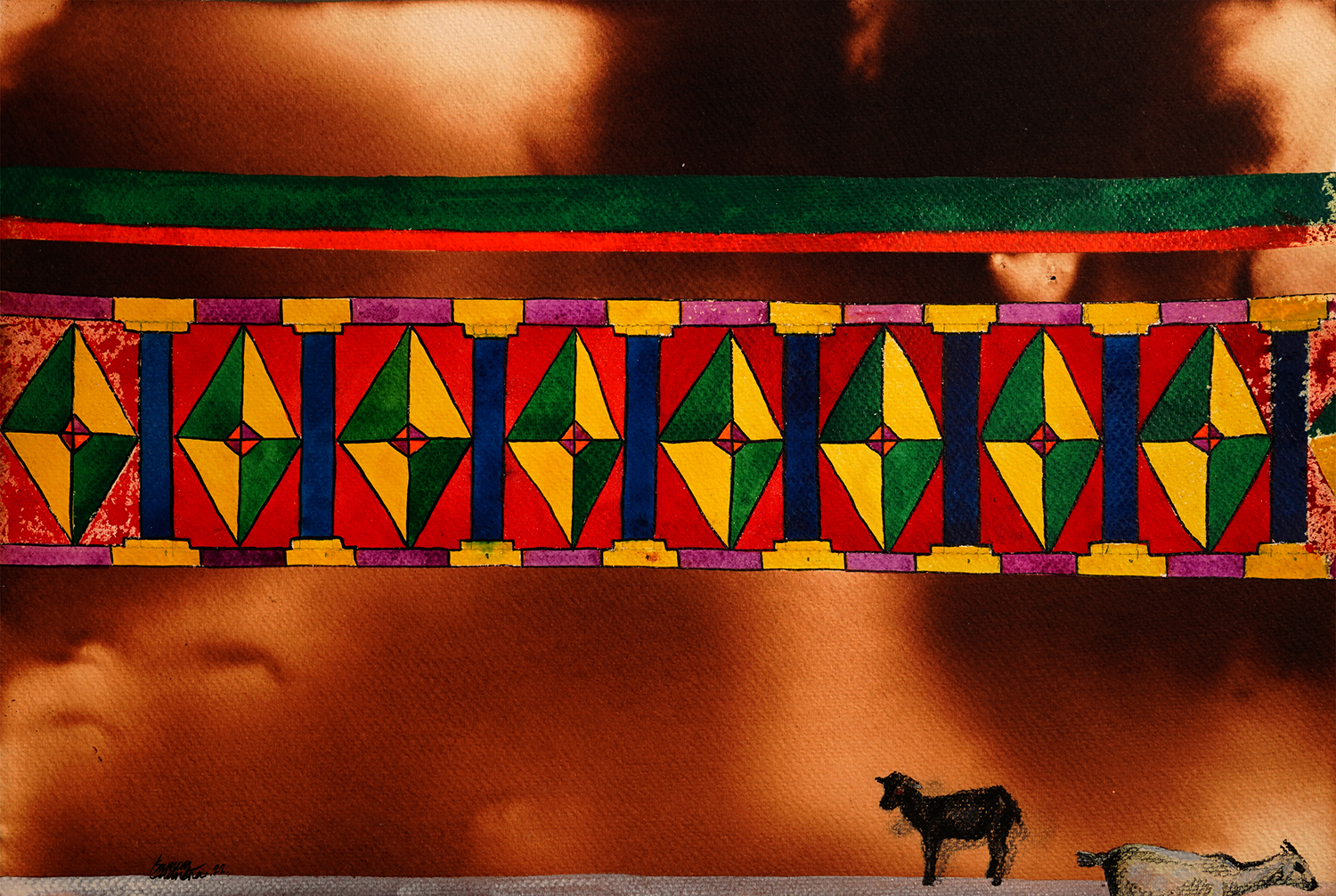
Sohrai is an Indigenous art form from Hazaribagh, Jharkhand, linked to the winter harvest festival. Women paint mud walls with natural pigments, depicting animals and plants to welcome and thank local deities. The process starts with a red line symbolizing ancestry and fertility, followed by a black line for Shiva and mortality. Other lines reflect values such as fidelity and protection. White comes from rice mixed with milk, with pigments like manganese black, yellow ochre and red oxide. Mothers teach daughters, preserving this matriarchal tradition.


Since the Doibari coal mine’s shifting landscape has altered Sohrai wall murals, I’ve integrated the land into my work. The mine, active until 2006, caught fire during extraction, and flames still burn, releasing toxic fumes through ground crevices as blue smoke. I create drawings on paper, mask sections with tape, and expose them to the flames for 15–20 minutes. The exposed areas turn yellow, which I fix into a brown shade by briefly placing the paper over a hotter crevice. Through repeated trials, I refined the timing and later added natural and artificial pigments used locally in Sohrai art.